What Happens to a Junk Car? The Full Breakdown
QUICK ANSWER: After a buyer takes a junk car, it gets appraised and towed, then drained of fluids and stripped of hazardous parts (depollution). Reusable parts and the catalytic converter are pulled for resale, and the leftover shell is crushed, shredded, and melted down into new steel.
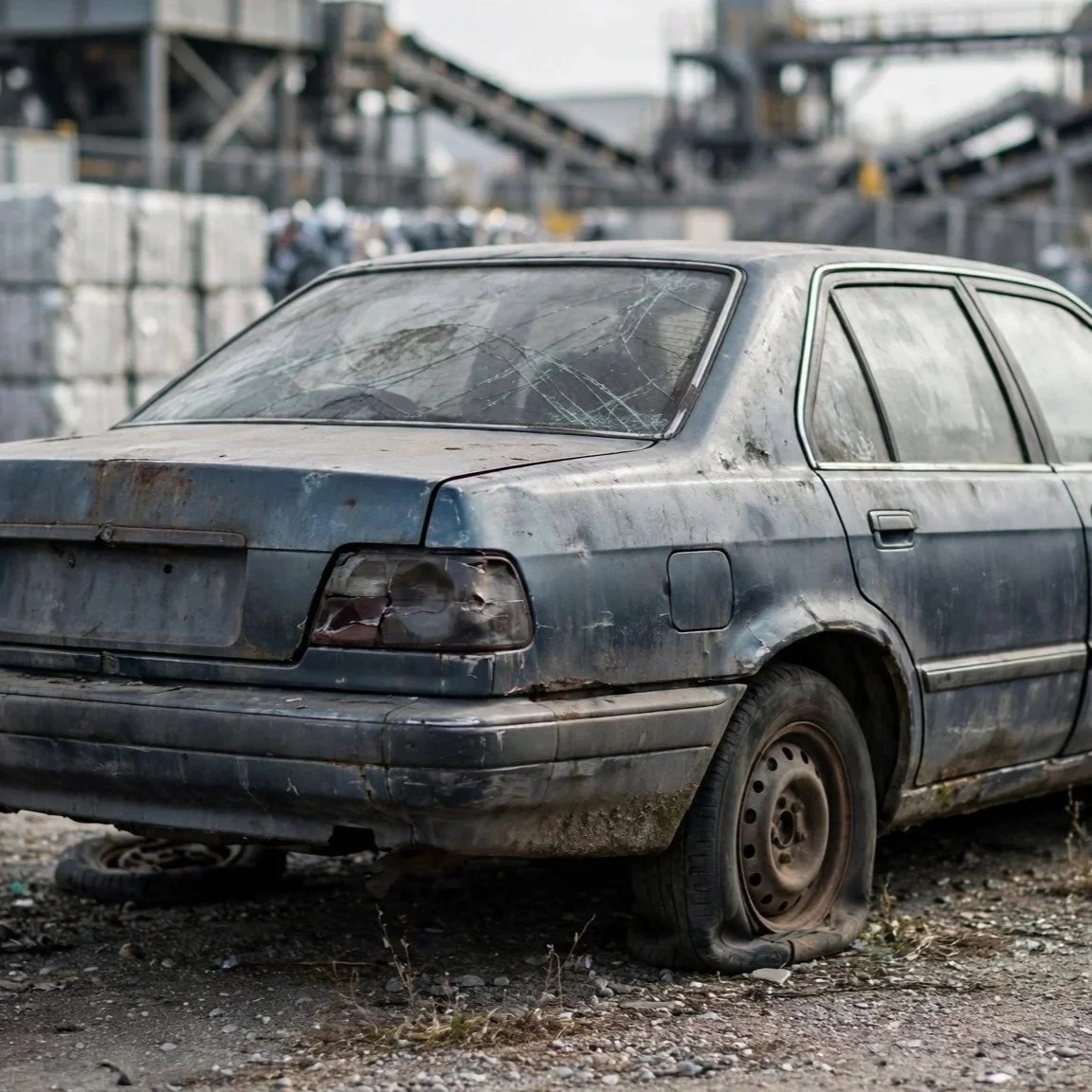
That car sitting flat-tired in the driveway may look like a total loss, but a junk buyer sees two different things stacked inside one body: a pile of usable parts and a few thousand pounds of recyclable metal. Even a vehicle that will never run again holds value in both. A late-model sedan might have a good transmission, working headlights, and a set of decent tires. A rusted-out truck might be worth little for parts but still carries most of its original steel and aluminum. Understanding where that value lives explains almost everything about what happens after the sale.
The process from your driveway to a steel mill is more organized than most people expect. It is closer to a disassembly line run in reverse of how the car was built, with each stage recovering something specific before passing the remains to the next.
Why an Old Car Still Has Value
A car is one of the most material-dense objects most households own. A typical passenger vehicle contains well over a ton of steel, plus aluminum in the wheels and engine block, copper in the wiring harness, and small amounts of platinum-group metals inside the emissions system. None of that disappears when the engine dies.
On top of raw metal, a car is a bin of interchangeable parts. Alternators, starters, door glass, mirrors, seats, control modules, and body panels are all things another driver somewhere needs right now. A part pulled from your car and tested costs a repair customer a fraction of a new one from a dealer, which is why the used-parts trade exists at all. The buyer's offer reflects both streams: what the parts will bring and what the scrap metal is worth by weight on the day it is processed.
Inspection, Appraisal, and Towing
The first real step is a quick assessment. A buyer wants to know the year, make, and model; whether the car runs; whether it rolls and steers; what is missing; and what condition the major parts are in. Much of that can be gathered over the phone or through a few photos, which is how instant quotes get made.
What the appraisal is actually measuring
The offer comes down to resale parts value plus scrap weight, minus the cost of hauling the vehicle in and processing it. A complete car that starts is worth more than a picked-over shell because more of it can be resold intact. Once a number is agreed on, the buyer arranges pickup, and reputable operations fold towing into the deal rather than charging for it. The car is winched or loaded onto a flatbed and hauled to a processing yard.
Depollution: Making the Car Safe to Recycle
Before anything is dismantled or crushed, the vehicle goes through depollution, the stage where hazardous materials are removed. Skipping this step is what turns an old car into an environmental problem, so a legitimate yard treats it as mandatory.
Fluids and gases that come out first
Technicians drain and separate engine oil, transmission fluid, coolant, brake fluid, power-steering fluid, and any remaining gasoline or diesel. Each is collected in its own container for recycling or safe disposal rather than allowed to pool on the ground. Fuel that is still clean can often be reused.
Hazardous components that get pulled by hand
The lead-acid battery comes out early, since lead and acid are both recoverable and dangerous if crushed. Older vehicles may carry mercury switches in the hood and trunk lighting, which are removed individually. The air-conditioning refrigerant is captured with a recovery machine so it is never vented, because those gases are potent contributors to atmospheric warming. Tires come off too, since they damage shredding equipment and are recycled on a separate track into crumb rubber and other products.
Harvesting the Reusable Parts
With the car clean and safe, the resale hunt begins. This is the stage that separates a dismantler from a simple crusher, and it is where a lot of a car's value is recovered.
Workers pull the parts with the strongest resale demand first: sound engines and transmissions, alternators, starters, radiators, and body panels without heavy damage. Glass, mirrors, lights, seats, wheels, and electronic control modules all come off and get cleaned, tested, and shelved or listed online. Parts are cataloged so a customer looking for a specific mirror or module can be matched to a car that had one. A door skin from your car can end up fixing a fender-bender two states away.
Catalytic Converter Recovery
The catalytic converter gets its own attention because of what is inside it. The converter's honeycomb core is coated with tiny amounts of platinum, palladium, and rhodium, the metals that scrub the exhaust as it passes through. Those metals are valuable enough that intact converters are removed carefully and sent to specialized refiners who recover the platinum-group content for reuse.
This is also why a missing converter noticeably lowers an offer. A car that still has its original converter is worth more than one where it has already been cut off, and buyers ask about it directly for that reason.
Crushing, Shredding, and Steel Recycling
Once every worthwhile part and the converter are off, what remains is the hulk, the stripped body and frame. This is where the car becomes raw material again.
From shell to shredded fragments
The hulk is flattened or baled to save space, then fed into an industrial shredder that reduces the entire body to fist-sized pieces in seconds. From there, the fragments run past powerful magnets that pull out the ferrous metal (the steel and iron) and separate it from everything else. A second sorting stage uses eddy currents and other methods to recover non-ferrous metals like aluminum and copper.
Turning the fragments back into steel
The recovered steel is baled and shipped to mills, where it is melted in electric-arc furnaces and cast into new stock. Recycling steel this way uses a large fraction less energy than making it from raw iron ore, and the metal can be melted and reused repeatedly without losing its structural quality. The fender on a new appliance or the rebar in a foundation may well have started as somebody's old sedan.
The Environmental Payoff
The depollution and recycling steps are not just procedures. Draining and containing fluids keeps oil, coolant, and fuel out of soil and groundwater, where even small volumes can contaminate a wide area. Capturing refrigerant instead of releasing it prevents a heat-trapping gas from reaching the atmosphere. Recovering the platinum-group metals from converters reduces the need for new mining. And because steel recycling saves so much energy against smelting new ore, every recycled car quietly lowers demand for both mining and power. A car that is properly processed is one of the more thoroughly recycled products in the waste stream, with the large majority of its weight recovered.
What Makes a Car Worth More
Not every junk car brings the same offer, and the differences are predictable once you know what the buyer is weighing.
Completeness and condition
A car that still has all its major components, especially the catalytic converter, engine, and transmission, is worth more than a shell that has been stripped. Missing wheels, seats, or electronics each subtract a little. A vehicle that starts and drives is generally worth more than an identical one that does not, because more of it can be resold as working parts.
In-demand parts and current metal weight
A common model with lots of cars still on the road has strong parts demand, since many drivers need those exact components. A heavier vehicle carries more scrap metal, and scrap prices move with the wider metals market, so the same car can be worth a bit more or less depending on the week. None of these swings are dramatic, but together they explain why two similar cars can fetch different numbers.
The Paperwork and Handoff
At a high level, selling a junk car means transferring ownership and ending your responsibility for the vehicle. In most cases, that involves signing over the title if you have one, and completing a release-of-liability step so the car is no longer tied to your name once it leaves.
Requirements vary by state, and some allow a sale without a title under certain conditions while others do not, so check your local rules or ask the buyer what documents they need before pickup. Keep a copy of whatever you sign and any bill of sale for your records. Handling the release-of-liability step is what protects you from tickets, tolls, or fees the car might rack up after it is gone.
How long does the whole recycling process take from pickup to melted steel?
The handoff and depollution can happen within a day or two of pickup, but the full path to recycled steel is longer and uneven. A car can sit in a yard for weeks or months while its parts sell off one at a time. Only after the resale value is exhausted does the shell go to the shredder, so the timeline is driven by parts demand, not a fixed schedule.
Can a car be recycled if it was in a fire or flood?
Yes. Burned and flooded cars are still processed, though they usually have little parts value left, since heat and water ruin electronics, wiring, and upholstery. Their worth shifts almost entirely to scrap metal. Flood cars need extra care in depollution because water can carry contaminants through the vehicle, and buyers factor that condition into the offer.
What happens to the glass, plastic, and seat foam that is not metal?
The leftover material after shredding is called auto shredder residue, a mix of glass, plastic, rubber, and foam. Some of it is sorted and recovered for lower-grade uses, and facilities keep improving how much they pull back, but a portion still goes to landfill. That non-metal remainder is why a car is not recycled at a full 100% by weight.
Do I need to remove my license plates before the car is taken?
In most areas, you should take the plates off before the car leaves, because they stay registered to you. Many states want plates returned to the motor-vehicle agency or transferred to another vehicle rather than left on a car headed for the shredder. Confirm the local rule, since leaving plates on can complicate the release of liability.
Is it worth pulling valuable parts myself before selling?
Sometimes, but it usually lowers the offer more than you gain. Buyers price a complete car partly on the parts they can resell, so removing the catalytic converter, battery, or wheels first cuts the value they place on it. Unless you already have a confirmed buyer for a specific part, selling the car whole is often the simpler return.
What about the tires and wheels, are those recycled separately?
Yes, on their own track. Tires are pulled before shredding because they foul the equipment, then ground into crumb rubber used in playground surfaces, athletic tracks, and road material. The wheels themselves, whether steel or aluminum, go back into metal recycling, and a set of decent tires may be resold before either is scrapped.
Get a free quote and free towing for that car in the driveway — turn dead weight into cash today. I Buy Junk Cars serves Phoenix and across the Valley. Call (480) 771-8290.