Can You Junk a Hybrid or Electric Car: The Battery Matters
Everyone you have asked has told you the same thing. Your hybrid has been sitting on the drive for two years, the pack stopped holding a charge somewhere around year ten, and the replacement quotes you were given cost more than the car has been worth since. So, the car is worthless, and nobody wants it. Both halves of that are wrong.
Yes, you can junk it. The pack under the floor is the part of the car most worth recovering, and it is the part a buyer most wants identified before your pickup is booked. Where that pack goes after the shell leaves your drive depends on what a test finds inside it, and there is more than one ending to that route.
One Component Changes Who Will Take the Car
The advice you have been given treats the battery as the problem. It stopped holding a charge; a replacement costs more than the car is worth; and so the reasoning goes that the car has become a liability with wheels parked in front of your house. That reasoning misses what the assembly actually is. A traction pack is a set of cells grouped into modules, housed with wiring, a thermal control unit, and a battery management system, and none of that material remains when the pack stops moving the car.
A pack that can no longer push a car down the road still holds the metals it was built with, and those metals are why a buyer takes the car whole. The distinction worth holding on to is simple: on an intact vehicle, the pack is a source of value, not a source of danger. Most people only read about a traction pack when something has gone wrong with one.
The Densest Block of Recoverable Material in the Vehicle
Start with what is inside the case. Federal guidance on lithium-ion battery recycling lists cobalt, nickel, lithium, and manganese as the metals recovered from spent cells, along with the copper and aluminum foils that carried the anode and cathode materials. Those are the elements the cell was built from, and they remain when the cell stops working.
Which metals, and in what proportion, depends on the chemistry, and the chemistry differs sharply across the class. Most of today's all-electric vehicles and plug-in hybrid models use lithium-ion batteries, while nickel-metal hydride has been widely used in conventional hybrids. Two cars of the same age on the same street can carry packs built on entirely different chemistry.
Most of what a car returns at the end of life comes from bulk materials: sheet steel, a cast iron block, and aluminum in the case and wheels. The pack works the other way. It is a sealed case full of metal that was mined, refined, and formed into a specific shape already, and a buyer will move a whole car to reach one assembly for that reason.
None of that is visible from your driveway. The case is bolted under the floor or behind the rear seat; it looks the same whether it is holding a charge or not, and what is left in it is a question for a bench and a tester. Your part is knowing it is there and telling the buyer you have one.
Who Buys the Pack Once the Car Is Gone?
A pack that comes out of a car has more than one buyer waiting, and they are separate markets. After-market replacement packs for electric vehicles are among the viable repurposing routes, alongside stationary grid and backup power, with recycling as the separate path. Which of those a given pack is fit for depends on what is left in the cells, so the first thing that happens to your pack is an assessment.
Reuse in another vehicle is the shortest route: modules that still have capacity go into a pack being rebuilt for a car in the same family, rather than into a recycler's feedstock. Second life is the longer one. Reuse and repurposing are still-developing options that could someday give batteries a second life on a larger scale before they are recycled, and "someday" carries weight in that sentence.
Material recovery is the floor under it. Direct cathode recycling is a route that keeps the cathode material as a cathode and retains its original value, in contrast to conventional methods that produce metal salts that require reprocessing. A pack nobody will reuse is still worth taking, and the buyer for it is not the one who wanted the modules in your car.
What Makes a Hybrid or EV Pickup Different?
The seller's part in all of this is one sentence, delivered early. A hybrid or electric car is routed differently from the moment the call ends: which truck is assigned, whether the arriving crew is set up for a pack, and where the car is placed when it reaches the yard. A quote given for a conventional car and a pickup that turns up to a hybrid is a wasted trip for both of you.
You do not need to know the chemistry, the capacity, or the state of the cells. Hybrid or electric, and whether the car still starts and moves under its own power, covers what the person taking the call needs to route it. Everything past that is the buyer's assessment to make with the car in front of them.
Lead with the words hybrid or electric, ahead of condition, keys, or paperwork. It is the one detail that changes the dispatch, and a quote built without it usually gets revised when the truck arrives.
The Cases Owners Assume Will Disqualify the Car
Owners go looking for the reason nobody will take the car, and the three conditions they land on do not qualify. A car that will not start, will not shift out of park, and will not roll onto a truck under its own power is an ordinary end-of-life vehicle, and a buyer plans around it instead of turning it away.
The pack feels different, because a dead pack sounds like a problem the buyer inherits. It is closer to the reverse. A pack that has lost capacity has lost it as a power source for a car, and the statement is narrower than it sounds: the assessment the next buyer runs asks a different question of the same cells. Your undrivable car and your finished pack are the ordinary starting condition for everything above.
Handing Over a Car With Its Pack Inside
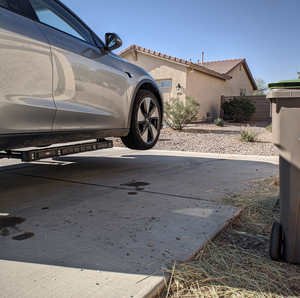
The pack leaves with the car, bolted where it has sat since the car was built. There is a good reason it stays in: an assembly still sitting in its mounts, with its wiring and its controller attached, is easier to identify, easier to move and easier to assess than a pack pulled loose in a driveway by someone without the equipment to test it. So the handover is smaller than it sounds. The car goes onto the truck as it stands, and the work of opening the case, reading the modules and routing what is inside happens somewhere else, on a bench, under proper lighting, by people whose only job that is.
What stays with you is nothing physical. Your description was the only part of this anyone needed from the driveway, and its accuracy was the only thing about the pack within reach. Everything after the truck pulls away is somebody else's assessment.
One pack, three places it can end up: back into a vehicle, into a rack of stationary storage, or into material recovery. All three start under the car's floor on your drive.
Frequently Asked Questions
Yes. A pack that no longer holds a charge changes how your car is moved and who is sent for it, and it does not change whether the car is wanted. Describe the condition when you call, including how long it has stood and whether it rolls. A hybrid parked for years with a flat pack is an ordinary pickup for a buyer who takes them, and your quote is built on that description.
Say that your car is a hybrid or an electric vehicle before you describe anything else, then say whether it starts and drives. You do not need the pack's chemistry, capacity, or age. If you know the pack was replaced at any point in its life, mention it, because a newer pack in an older car changes what your buyer expects to find under your floor, and it is worth saying early.
Capacity is measured on a bench. The pack comes out of the vehicle, the case is opened, and the modules are read individually because a pack can fail due to a few weak modules while the rest retain usable capacity. Those readings separate a pack headed back into a vehicle from one headed to a recycler, and none of that work can be done from a photograph or from what you say on the phone about your car.
No, and pulling it out yourself would work against you. A high-voltage assembly removed by someone without the tools to test or crate it is harder to route than the same assembly still bolted into the car it came from, and it is worth less to the buyer you are selling to. Leave it where the factory put it. Your car travels as one object, and the case is opened at the far end.
Your pack is smaller, and your car still carries an engine, so a plug-in hybrid arrives with both a fuel system and a high-voltage system in it. That changes your description, not the answer you get. Mention the plug, mention the engine, and let the buyer sort out which parts of the vehicle route where. Both are ordinary vehicles for a yard that takes them, and neither one is harder for you to sell.
The route gets worked out after the car has left the driveway. A pack is assessed on a bench after it comes out, and the assessment produces one of two outcomes: a pack with modules worth reusing, or a pack worth only the metals inside. Those go to different buyers on different terms. Nothing you say on the phone changes which of the two a given pack turns out to be, and nothing visible from your driveway predicts it either.
If the car on your drive is a hybrid or an electric model with a pack that stopped holding a charge, say so when you ask for a quote — the pack is the part of the car a buyer wants to know about before a truck leaves the yard. I Buy Junk Cars serves Phoenix and across the Valley. Call (480) 771-8290.