
Selling a Hail-Damaged Car As-Is? What Buyers Check First
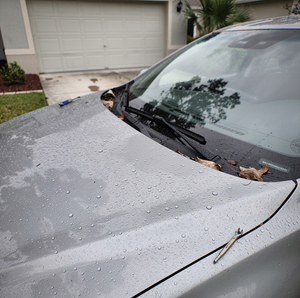
Hail hits a car from above, so it dents the sheet metal it lands on and can crack the glass it strikes hard enough, but it does not reach the engine, transmission, or running gear beneath the body. The suspension and the rest of the running gear sit under and behind that dented sheet metal as well. That split between what hail touches and what it leaves alone is why a hail-damaged car with a sound drivetrain still carries parts value under its dents. Each area a buyer walks first is paired with what gets checked there and how it shapes the offer.
| Area | What the Buyer Checks | What It Means for the Offer |
|---|---|---|
| Roof and roof rails | Depth and number of dents, whether the panel has creased sharply anywhere | Lowers the body's worth as parts; says nothing about the drivetrain underneath |
| Hood and trunk lid | Dent count and depth, whether either panel still closes and latches flush | A hood or trunk lid that no longer closes and latches flush is checked separately from dent count, since it affects the panel as a usable part |
| Side panels and pillars | Dents on doors, fenders, and quarter panels; whether a pillar took a direct hit | Door and fender dents lower those panels' worth as parts; a pillar that took a direct hit gets a closer look at fit and alignment |
| Windshield | Cracks, chips, and whether the crack runs across the driver's sightline | A cracked windshield is one less usable part, whatever the dent count on the body |
| Back glass and any sunroof | Cracks, and whether either was open or already leaking before the storm | Cracked or leaking glass raises the question of whether water reached the interior |
| Lights, mirrors, and trim | Cracked lenses, dented mirror housings, loose or missing trim pieces | Smaller pieces, but each missing or cracked one is one less usable part on the car |
| Paint cracked at a dent | Whether the paint film broke at the bottom of a dent or only flexed | A dent with broken paint and exposed metal is treated differently than one with the paint intact |
Why the Top Surfaces Take the Damage, and the Drivetrain Does Not
A hailstone falls straight down, and its full impact hits whatever surface faces the sky: the roof, the hood, the trunk lid, and the top edges of the fenders and doors. Those panels are thin, unsupported sheet metal, so the force of the strike shows up immediately as a dent. The engine, transmission, suspension, brakes, and the rest of what makes the car run sit low, under the body, or behind panels the hail never reaches directly. None of that hardware cares how the storm treated the roof. A car can carry dents across every top panel and still start, shift, and drive exactly as it did before, which is the reason a rough-looking hail car is not automatically a rough-running one.
A windshield cracked badly enough to block your view is not safe to drive; have the car towed instead of driving it yourself. Broken glass inside the cabin is left for the tow crew, handled with gloves rather than bare hands.
The roof rails and the structure beneath the skin are a separate question from the dents sitting on top of them. Large hail can dent a roof rail or a pillar as well as the skin, and a buyer checks those spots for door fit and alignment, but the storm does not reach the drivetrain underneath. Climbing up for a closer look is not how that gets confirmed. Roof damage from a hailstorm gets read from the ground, the same way the pickup driver checks it.
Glass and Sunroof Damage and What Water Getting Inside Means
A crack that runs into the driver's sightline is a separate safety issue from every dent on the car. If a sunroof cracked or was left open during the storm, the concern shifts from the glass itself to whether water reached the cabin, which is a separate question from the dents.
Cracked Paint at a Dent and Why Bare Metal Changes the Picture Over Time
A hail dent can leave the paint intact: the panel flexes inward while the clear coat and base coat flex with it, and the surface stays sealed, even though the shape underneath has changed. Or a harder strike, or one that catches a panel edge or a body line, can crack straight through that paint film down to bare metal. Once the paint is broken, the metal underneath is exposed to air and moisture instead of sealed behind a coating, and that exposed spot keeps changing on its own after the storm has passed, in a way an unbroken dent does not. A buyer reading the damage treats a panel with cracked paint differently than one where every dent left the finish sealed, because the two are not aging the same way once you park the car and walk away.
What Repairing It First Involves Compared with Selling It as It Sits
Two different repair paths apply depending on what the paint did. Where the paint held and the metal underneath is still sealed, a paintless dent repair route works the shape back out from behind the panel without touching the finish, which is why it only applies to dents that never broke through. Where the paint cracked or a panel creased sharply, that route no longer applies, and the repair moves to filling and repainting the spot or replacing the panel outright. Whether either route is worth paying for on this particular car, set against what the car is worth once it is fixed, is the same repair-or-junk math that applies to any repair decision and is not specific to hail. Selling the car as-is skips that decision entirely: the offer reflects the car's weight, its parts value, and whether it runs, with the dents and any cracked glass factored into that same total rather than repriced part by part.
Describing the Damage for a Quote
A quote given over the phone is built from what you report, so the more specific that report is, the closer the number lands to what holds at pickup. Count the panels that show damage by name, roof, hood, trunk lid, and each door or fender, rather than trying to estimate a total dent count across the car. Note any cracked or chipped glass separately, and say clearly whether the crack sits in the driver's line of sight. Say whether the car moves under its own power onto a trailer, since that changes how it gets loaded regardless of what the body panels look like. Photos help fill in what a phone description cannot: send shots of the roof and hood taken from a high angle beside the car, plus shots from each side, so the buyer can see dents that a single angle can hide.
A Car with an Insurance Claim Already Paid or a Branded Title
A storm severe enough to push the repair estimate past what an insurer will pay can end in a total-loss decision and a branded title instead of a repair, and that threshold and the branding question that follows it are a separate decision from the damage walk-around. If you already took a payout and kept the car, or you are weighing that choice, the terms of your policy and the payout itself are what decide it, not the storm damage on its own.
Frequently Asked Questions
Should dents be pushed out by hand before the sale?
No. Pressing a dent from behind without the right tools can crack the paint and turn a sealed dent into a broken-paint one; the car is quoted as-is.
Does the buyer separate hail dents from dents the car already had before the storm?
No. The offer reflects the car's condition at pickup, not the history behind each mark, so a dent from years ago counts the same as one from the storm. There is no need to sort out which dent came from what before requesting a quote.
Can hail damage affect a camera or sensor mounted in a mirror or the trunk lid?
On some models, yes. A cracked mirror housing or a trunk lid that creased hard enough can shift or damage a camera or sensor bracket mounted in that spot, and a damaged camera or sensor lowers that part's value even where the surrounding panel held up.
Does touching up a cracked-paint dent before the sale help?
Not for the offer. A touch-up over clean bare metal seals it from air and moisture while the car waits for pickup, but the dent and the panel are still quoted as they are.
Why do buyers ask for photos taken at a low angle rather than straight on?
Hail dents are shallow, and a photo taken straight-on or from too far to the side can flatten a dented panel's appearance in the frame. A shot taken from a high angle beside the car, or with the sun or a light source low and off to one side, throws a shadow into each dent that a level, head-on photo can miss entirely.
Does damage concentrated on one side of the car change how it gets quoted?
No. A car that sat partly under a carport, an awning, or another vehicle during the storm can show heavy damage on the exposed side and little or none on the sheltered side. The panels on the sheltered side are still usable parts, and the offer reflects which parts came through undamaged.
Arrange a cash offer with free pickup for your hail-damaged car — the quote is based on the car's weight, usable parts, and whether it runs. I Buy Junk Cars serves Phoenix and across the Valley. Call (480) 771-8290.