License Plates and Insurance After You Sell a Junk Car
The tow truck pulls away with your old car, the cash is in your pocket, and it feels finished. It usually is not. For a short window after the car leaves, the paperwork still ties your name to a vehicle you no longer own, and that link can cost you if it is left open.
A few quick tasks close the gap. Handle your license plates and insurance after selling a junk car, tell the DMV the sale happened, and hold onto proof, and you protect yourself from three specific headaches: liability for anything the new owner or salvage yard does with the car, toll and parking charges that keep billing to your account, and fees you would otherwise keep paying on a vehicle sitting in someone else's yard.
Think of the sale as two events, not one. The physical handoff ends when the car is loaded. The legal handoff ends only when your name is off the title and the state's records. Skipping the second half is where people get burned.
QUICK ANSWER: After selling a junk car, pull your license plates before it leaves, keep insurance active until the car is gone and paid for, and then cancel or transfer it; cancel or transfer the registration; file a release of liability with the DMV; and save the bill of sale. Plate and registration rules vary by state, so confirm the specifics with your local DMV.
Why These Steps Protect You Before the Car Is Gone
Once your signature is on a title or bill of sale, ownership has changed hands in practice, but the state does not know that until you tell it. Until the record updates, the vehicle is still registered to you. If the new owner racks up a toll violation, abandons the car on a street, or the yard sells it to a third party who does something worse, the first name that comes up on the plate is yours.
Filing a release of liability, sometimes called a notice of transfer or notice of sale, is the single step that severs that connection. It puts a dated statement on file saying you no longer own the car as of the sale date. Everything else on the list, from plates to insurance, either supports that record or saves you money that would otherwise leak out after the sale.
Do these in a sensible order. Some steps happen while the car is still in your driveway, and one insurance step should wait until the car is confirmed gone.
Remove the License Plates Before the Car Leaves
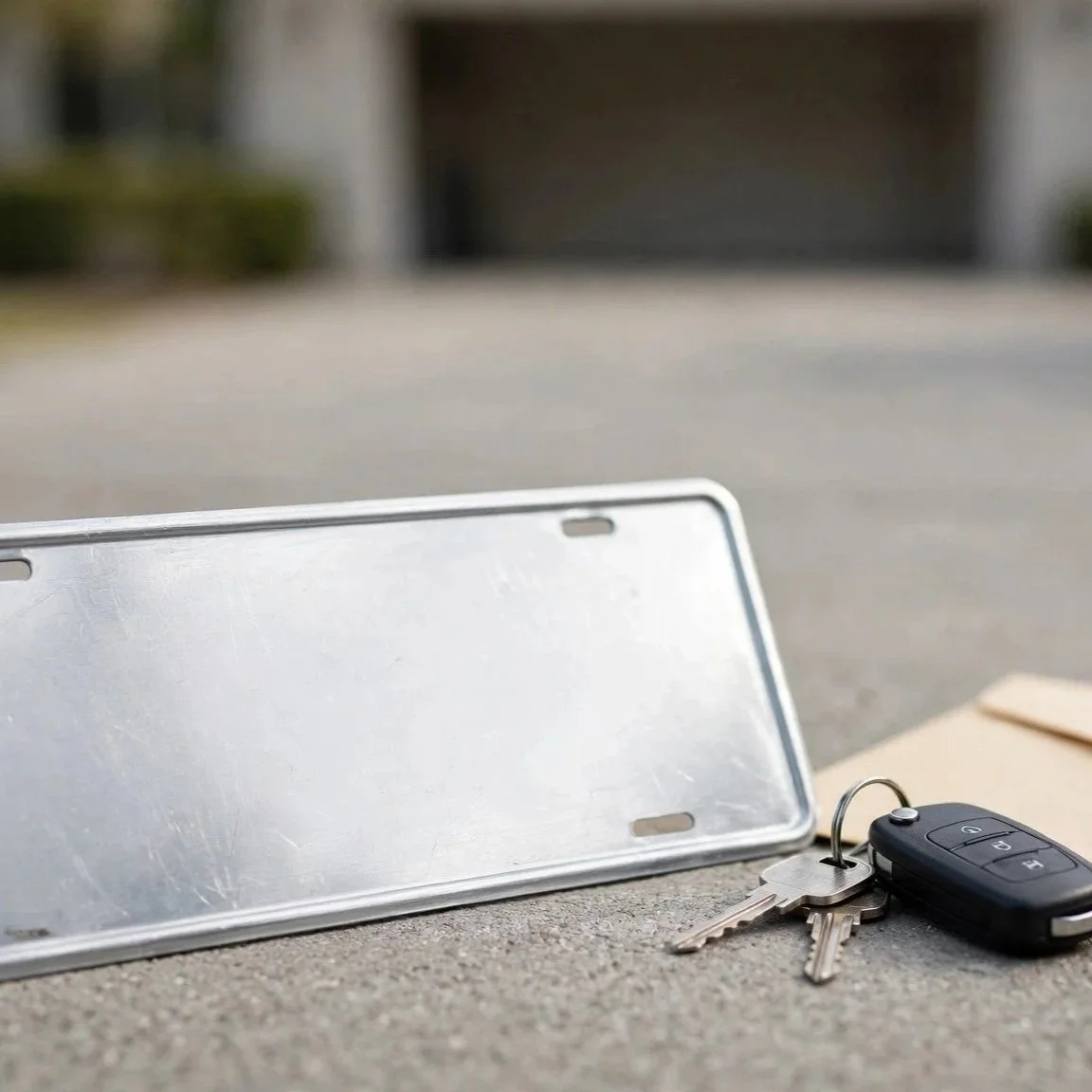
In most areas, the license plate belongs to the registered owner, not the vehicle. When you sell or scrap the car, the plates come with you, not with the metal. Unscrew them from the front and rear before the tow truck arrives, because once the car is on the flatbed, retrieving a forgotten plate from a salvage lot is a hassle you do not need.
What you do with the plates next depends on your state. Common paths:
Surrender them: Some states require plates to be turned in at a DMV office or by mail when the vehicle is retired. Surrendering can also stop registration fees or renewal notices from continuing.
Transfer them: Many states let you move a valid plate to your next vehicle, which can save you the cost of a new plate and keep a plate number you like.
Destroy or recycle them: A few states allow you to keep or dispose of old plates yourself once registration is closed. Where this applies, defacing the plate so it cannot be reused for fraud is the safer move.
Because these rules differ so much from one state to the next, confirm the correct handling with your local DMV rather than assuming the neighbor's advice still applies.
Cancel or Transfer Your Insurance the Right Way
The order here matters more than any other step. Do not cancel your auto insurance until the car is physically gone and you have been paid. If you cancel the morning of pickup and the buyer no-shows, or a dispute delays payment, you could be driving or storing an uninsured vehicle, which is a risk that dwarfs a day or two of premium.
TIP: Do not cancel your auto insurance until the car is physically gone and you have been paid. If you cancel the morning of pickup and the buyer no-shows, or a dispute delays payment, you could be left storing an uninsured vehicle.
Once the car has left and payment clears, call your insurer with two options in mind:
Transfer the coverage: If you are replacing the junk car with another vehicle, most insurers move your existing policy to the new car. That keeps your coverage history intact and often avoids a gap that can raise future rates.
Cancel and ask about a refund: If you are not replacing the car, cancel the policy on that vehicle. If you paid the premium in advance, you may be owed a prorated refund for the unused portion of the term. The amount is usually small, but it is your money, and asking costs nothing.
Tell the insurer the exact date the car left your possession. That date should match the sale date on your paperwork so the records line up if anything is ever questioned.
Close Out the Registration and Ask About Refunds
Registration is separate from insurance and from the title, and it has its own cleanup. Depending on the state, you may need to cancel the registration, transfer it to another vehicle, or simply let it lapse once the release of liability is on file.
Where states charge registration in advance, some offer a prorated refund of unused registration fees when a vehicle is permanently retired or sold. Not every state does this, and the ones that do often require you to surrender the plates first or submit a specific form. Ask the DMV directly whether a refund applies in your situation and what triggers it, because the answer varies widely.
Closing the registration also stops renewal notices and any late penalties that would otherwise pile up on a car you no longer have.
Notify the DMV and File a Release of Liability
This is the step that actually protects you, so do not treat it as optional. Notifying the DMV of the sale, usually through a release of liability or notice of transfer form, records the date ownership changed and lifts responsibility for what happens to the car afterward.
Many states let you file this online in a few minutes; others accept a mailed form. Have the buyer's or yard's information, the sale date, and the vehicle identification number ready. Once filed, keep the confirmation. If the car later turns up in a citation, an abandonment complaint, or a parking dispute, that dated release is your proof that it was no longer yours.
If your state issues a salvage or junk certificate when a car is scrapped, that document works alongside the release to formally retire the vehicle from the road.
Keep the Bill of Sale and Any Signed Title or Receipt
Paper is your defense. Before the car leaves, make sure you have a signed bill of sale that lists the date, the price, the vehicle identification number, and both parties' names and signatures. If a title is involved and you signed it over, keep a photo or copy of the signed title before it goes with the car.
Also keep any receipt or cash acknowledgment from the buyer. Store all of it together, including digital copies, for at least a year. If a question about ownership, tolls, or taxes surfaces months later, having the paperwork in one place turns a stressful phone call into a two-minute answer.
Pull Transponders, Permits, and Personal Belongings
The last pass is the easy one to forget in the rush of a pickup. Walk the car once with a checklist:
Toll transponder: Remove any toll tag from the windshield. Left in place, it can keep charging your account as the car moves through the salvage chain, and those charges are a headache to reverse.
Parking and access permits: Peel off residential, employer, or garage permits so they cannot be reused, and cancel any that bill you monthly.
Registration and insurance documents: Take the paperwork out of the glovebox so your personal details do not travel with the car.
Personal belongings: Check under seats, in the trunk, the spare-tire well, and the center console. Garage remotes, sunglasses, chargers, and paperwork hide in cars that have not moved in months.
None of these takes long, and each one closes a small door that a stranger could otherwise walk through.
Can I sell a junk car if I already turned in the plates?
Yes. Plates and the vehicle are handled separately in most states, so surrendering your plates does not stop you from selling the car for scrap. What matters for the sale is proof of ownership, usually the title or, where the title is missing, an accepted alternative your buyer and state allow. The plates were never part of what you are transferring.
What if I already canceled insurance before the buyer showed up?
Call your insurer and ask to reinstate the policy for the short window until the car is actually gone. Many companies can restore a recently canceled policy without a lapse if you act quickly. If reinstatement is not possible, keep the car parked and unmoved on private property until pickup, since an uninsured car sitting still on your own property carries far less exposure than one driven on public roads.
How long does a release of liability take to protect me?
The protection generally starts from the sale date you list on the form, not the date the DMV processes it, which is why filing promptly and keeping the confirmation matters. If a citation is dated after your listed sale date, the release is what shifts responsibility to the new owner. Delays in filing can leave a gap where a violation lands before your notice is on record.
Do I get money back on a personalized or specialty plate?
Personalized and specialty plates are usually tied to you rather than the car, so you often keep them and can transfer them to a future vehicle instead of paying for a new set. The extra fee you paid for the custom design is typically not refundable, but the plate itself stays yours. Confirm transfer rules with your DMV, since specialty plate handling differs from standard plates.
Is there any cost to filing the sale paperwork with the DMV?
Filing a release of liability or notice of transfer is commonly free, and closing out these loose ends does not require paying a service. Some optional steps, like ordering a duplicate title before the sale or transferring a plate to a new car, can carry a small state fee. The liability notice itself, the step that protects you most, generally costs nothing to submit.
What happens if the buyer never registers the car?
With a properly filed release of liability, the state's records show you sold it on a specific date, so an unregistered car sitting in a yard is no longer your problem. Without that filing, the car stays linked to you, and unpaid renewal fees or an abandonment complaint can trace back to your name. The release is what stops a buyer's inaction from becoming your liability.
Skip the paperwork maze and get a fast cash offer — we buy your car in any condition and handle pickup for free. I Buy Junk Cars serves Phoenix and across the Valley. Call (480) 771-8290.