How Much Does a Catalytic Converter Add to Your Junk Car's Cash Offer?
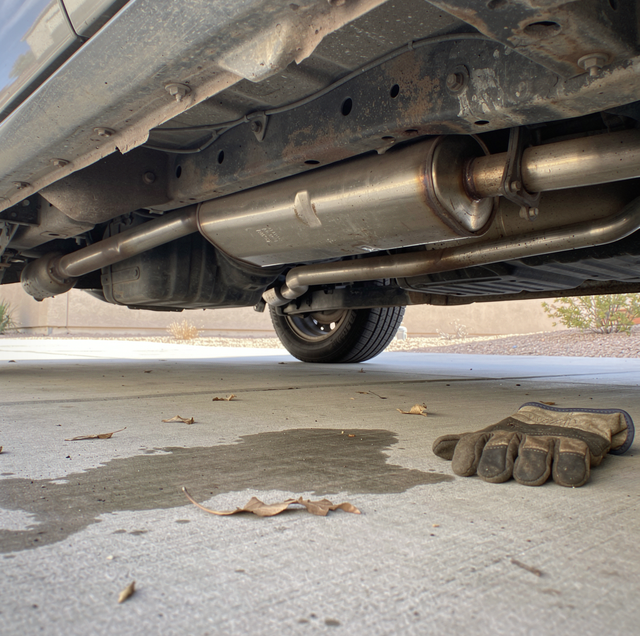
Pop the hood, or slide underneath with a flashlight, and the catalytic converter looks like the least interesting part of the whole car. It's a dull metal canister bolted into the exhaust line, usually coated in road grime, easy to mistake for just another pipe fitting. It isn't. Ounce for ounce, that canister can hold more raw value than the engine sitting above it, and whether it's still bolted in place, intact, and unmolested is one of the bigger swing factors in what a buyer offers for a car that no longer runs.
Most sellers never think about the converter until someone asks about it, and by then it's worth knowing what's actually inside that housing, why it matters so much to a scrap offer, and why so many of these parts go missing before a car ever reaches a buyer's lot.
What Makes A Catalytic Converter Valuable
Inside every catalytic converter sits a ceramic honeycomb coated in a thin layer of precious metals: platinum, palladium, and rhodium, in varying ratios depending on the engine and emissions standard the vehicle was built to meet. These three metals do the actual chemical work of converting harmful exhaust gases into less harmful ones, and all three trade on commodity markets the same way gold or silver does. Rhodium in particular has, at various points, traded for several times the price of gold per ounce, which is part of why a part that looks like scrap steel from the outside can be worth real money on the inside.
How Converter Condition Shapes A Buyer's Offer
An intact, bolted-in converter that hasn't been cut, crushed, or gutted is worth more to a buyer than one that's been tampered with, and the difference isn't small. A converter still attached to its original pipe, in reasonably solid shape, gives a buyer an easy part to pull and resell to a recycler or core buyer. A converter that's been cut off with a reciprocating saw, or one that's rusted through and partially collapsed, is worth less, sometimes a lot less, because pulling usable metal out of a damaged shell takes more work and yields less.
As a rough, general sense of scale, an intact converter in decent condition can add somewhere in the range of fifty to a few hundred dollars to a cash offer, depending on the vehicle and the specific unit installed, with certain larger trucks and some luxury imports landing toward the higher end of that range. Those numbers move constantly with commodity prices, so any figure quoted today is an estimate rather than a fixed number, but the general pattern holds: a whole, working converter adds real weight to an offer, and a stripped or badly damaged one adds far less.
Corrosion plays its own role here too. In a wet or salt-heavy climate, converters and their mounting hardware rust and seize, which can make a unit harder to remove cleanly and lower its resale condition by the time it reaches a buyer. In a dry climate, that kind of corrosion is rare, so converters from older vehicles tend to come out in better physical shape even after years of use, which works in a seller's favor when a buyer is sizing up the whole car.
Why Converter Theft Has Become So Common
Precious metal prices are the entire reason converter theft turned into a widespread problem over the past several years. A part that used to be an anonymous piece of the exhaust system became a target because it can be removed in minutes with a battery-powered saw and sold to a scrap buyer for a real sum, often with little scrutiny about where it came from. Trucks and SUVs with higher ground clearance are especially easy targets, since a thief can slide underneath without needing to jack the vehicle up first, and certain hybrid models carry converters with unusually high metal loading, which has made them frequent targets as well.
For a seller, the practical effect shows up the moment a buyer looks underneath the car. A missing converter isn't just an inconvenient repair; it's a chunk of value gone that the buyer would otherwise have counted toward the offer, and it also usually means a hole cut in the exhaust pipe, an added repair or removal cost, and sometimes damage to the surrounding heat shields or brackets from how the part was cut free. All of that gets factored into a lower number, not because a buyer is trying to penalize the seller, but because the part that would have added value isn't there anymore.
If a converter has already been stolen, mentioning that up front when getting a quote tends to work in the seller's favor. A buyer who knows what to expect before arriving can provide an accurate number over the phone, rather than adjusting the offer downward on-site after finding an unexpected cut in the exhaust.
Where The Converter Fits Alongside Other Value Drivers
A catalytic converter is one input into a scrap offer, not the whole calculation. Weight is still the base of most offers, since scrap steel and aluminum get priced by the pound, and a heavier vehicle, like a full-size truck or SUV, starts from a higher baseline than a compact sedan regardless of what's under the exhaust. On top of that base weight, a buyer looks at which parts still work: a battery that holds a charge, a starter or alternator that functions, wheels and tires in usable shape, or a transmission that isn't seized. Each of those adds a small amount on top of the scrap weight.
The converter falls into the same category of "working parts that add on top of the base weight," but it usually adds more per part than almost anything else under the hood, because of what it's made of rather than how much it weighs. A car with a stripped interior, a cracked windshield, and missing trim can still command a solid offer if the converter, engine, and drivetrain are intact, since those are the components that carry real resale value beyond scrap-metal pricing. Flip that around, and a cosmetically clean car missing its converter and a few other key components can land a lower number than its appearance might suggest.
Overall condition and completeness matter, too, in that a buyer values a car as a whole system rather than adding up parts in isolation. A vehicle that's mostly complete, with its major components present even if none of them run, tends to appraise higher than one that's been picked over piece by piece, even if the remaining pieces are individually intact. The converter is simply one of the highest-value pieces in that system, which is why its presence or absence tends to move the number more than most other single parts would.
Getting An Accurate Read On A Car's Converter Value
The only way to know what a specific converter is worth is to have someone who buys these vehicles regularly look at the actual unit, or at minimum hear a description of the vehicle's year, make, and model along with whether the converter is present and appears intact. General ranges are useful for setting expectations, but the metal loading, size, and even the exact factory part number can shift a specific unit's value up or down from a rough estimate.
Sellers sometimes assume a missing converter makes a car worth almost nothing to a buyer, which usually isn't the case either. Weight, remaining working parts, and overall completeness still count for a meaningful share of most offers, so a car without its converter typically still has real value, just a lower number than the same car with an intact one. Getting a quote before assuming the worst, or the best, tends to be the more useful step than guessing.
Which precious metals are inside a catalytic converter?
Most converters contain a mix of platinum, palladium, and rhodium coated onto a ceramic honeycomb inside the metal housing. The exact ratio depends on the vehicle's engine and the emissions standard it was built to meet, which is part of why converter values vary so much between models.
Does a bigger vehicle always mean a more valuable converter?
Not always, but there's a general pattern. Larger engines and certain import models tend to use converters with higher metal loading, which usually pushes value up, while some compact models with high-loading units can outvalue larger vehicles with basic converters. Size is a reasonable starting guess, not a guarantee.
How much does a stolen or missing converter typically lower an offer?
It varies by vehicle, but a missing converter generally removes whatever that part would have added, and it often entails additional repair costs for the cut exhaust pipe and any damaged brackets or heat shields. Mentioning it up front usually results in a more accurate quote than finding it during an inspection.
Can a damaged or rusted converter still add any value?
Usually yes, just less than an intact one. A damaged unit can still be pulled and processed for its metal content, but a cut, crushed, or badly corroded shell yields less usable material and requires more work to remove, both of which typically reduce the number compared to a whole, working converter.
Does converter value change over time?
Yes, and it can move quickly. Platinum, palladium, and rhodium all trade on commodity markets, so a converter that added a certain amount to an offer a year ago could be worth noticeably more or less today depending on where those metal prices currently sit.
Is it worth replacing a stolen converter before selling a junk car?
Rarely. Replacement parts and labor typically cost far more than the difference a missing converter makes to a scrap or cash offer, so most sellers come out ahead getting a quote on the car as it sits rather than paying for a repair on a vehicle headed for scrap anyway.
Gather your title and ID, then call for a cash offer — one call turns a parked junk car into money in hand. I Buy Junk Cars serves Phoenix and across the Valley. Call (480) 771-8290.