What Counts as a Salvage Vehicle? And Can You Still Sell It
QUICK ANSWER: A salvage vehicle is one that an insurer has declared a total loss, usually because the cost to repair it climbs past a set share of what the car was worth before the damage. The state then issues a salvage title. You can still sell it, most often to a salvage buyer, a rebuilder, or a scrap yard, as long as you disclose the salvage brand to the buyer.
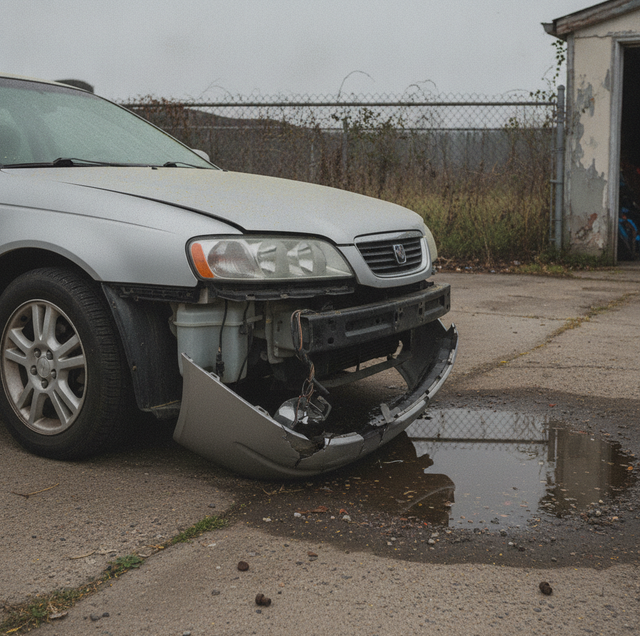
You get an offer from your insurance company, and instead of a repair check, you hear the words "total loss." A few weeks later, a document shows up with a new word stamped across it: salvage. Now the car is sitting in your driveway, the title says something different than it used to, and you are not sure what you are even allowed to do with it.
The short version is that a salvage vehicle is not worthless, and in most cases, you can still sell it. But it helps to understand exactly what the label means, how a car earns it, and what changes once it is attached, because that word follows the vehicle from then on.
What a Salvage Vehicle Actually Is
A salvage vehicle starts with a decision made by an insurance company, not by a mechanic, and not by you. When a car is damaged, the insurer estimates the cost to restore it to its pre-loss condition. If that repair estimate crosses a certain point relative to the car's value, the company decides that paying to fix it makes no financial sense. Instead of issuing a repair check, it declares the car a total loss and pays the vehicle's value.
Once that happens, the car gets flagged. The state issues a new title with a brand on it, and that brand is the word "salvage." A branded title is a permanent note on the vehicle's ownership record indicating that the car was totaled. It is the paperwork equivalent of a scar. The car might look fine, it might even run, but the record now carries that history.
It helps to picture the title like a medical chart that travels with a patient. A new prescription or a clean checkup does not erase an old surgery from the chart. The event is logged, and every future doctor sees it. A branded title works the same way: the salvage event is recorded in the car's permanent history, and every future buyer, dealer, and insurer can see it.
What Sends a Car to Salvage Status
Collisions are the obvious cause, but they are not the only one. A car can end up branded salvage from several kinds of damage, and the reason matters because it affects what is still usable underneath.
Collision: A serious wreck bends the frame or destroys enough panels and mechanical parts that the repair bill outruns the payout.
Flood: Water gets into the electrical system, the engine, and the interior. Flood damage is hard to fully undo, and corrosion can keep surfacing for years.
Fire: Even a fire that starts small can warp metal, melt wiring, and ruin the interior beyond repair.
Theft recovery: A stolen car that is found after the insurer has already paid the claim often comes back stripped of parts or damaged, and it may be totaled at that point.
Hail: A severe storm can dent a roof, hood, and every panel enough that cosmetic repair alone exceeds the threshold.
One cause matters far more in wet or salted-road climates than in dry ones: corrosion from road salt. Cars in dry climates tend to stay solid underneath even when they are old or non-running, which is part of why a rust-free salvage vehicle can hold usable metal and parts longer than a comparable car from a wetter, saltier place.
Salvage Title Versus Rebuilt Title
This is where a lot of confusion lives, because the two sound similar and both are branded, but they mean different things about whether a car can legally be on the road.
A salvage title is the first brand. It marks a car that has been totaled and is not considered roadworthy in that state as it sits. You cannot simply register a salvage-titled car and drive it to work. It is, in the eyes of the paperwork, a wreck waiting for a decision.
A rebuilt title, sometimes called a reconstructed title, is what a salvage car can earn after it has been repaired and then passed a state inspection confirming the work was done and the car is safe to operate. At that point, the state upgrades the brand, and the car can be registered and driven again. The rebuilt brand still tells the world the car was once totaled, but it also signals the car has been put back together and checked.
So the path runs in one direction. A car becomes salvage, and if someone invests the work and it passes inspection, it can move up to rebuilt. What it does not do is go back to a clean title. Once the record is branded, it stays branded.
Salvage, Junk, and Clean-Title Used Cars Are Not the Same
People use these words loosely, but they describe three different situations, and knowing which one you have changes who will buy the car and how.
A clean-title used car has no brand at all. It may have plenty of miles and dings, but no insurer ever totaled it. It is a normal used vehicle.
A salvage car carries a brand because it was totaled, but it may still have real repair or rebuild potential. Someone with the skill and parts could bring it back to a rebuilt title, or strip the good components. It is damaged, but not necessarily finished.
A junk car is one whose value lies entirely in its parts and its metal. It is not going back on the road under anyone. The engine might be seized, the frame bent beyond saving, or the cost of fixing it so far beyond reach that nobody would try. A junk car is worth what can be pulled off it and what the shell weighs at the scale.
The overlap is why the terms blur together. A salvage car that nobody chooses to rebuild often ends up treated as a junk car in practice. But the distinction still matters when you go to sell, because a rebuilder and a scrap yard are looking for different things.
Yes, You Can Still Sell a Salvage Vehicle
Here is the part most owners are relieved to hear. A branded title does not keep the car from being driven. It changes who your buyers are, but there are buyers.
The most common places a salvage or junk car finds a home:
A salvage buyer: These are businesses that specifically buy branded and totaled vehicles, often in any condition, and handle the towing and paperwork.
A rebuilder: An individual or shop that repairs salvage cars and takes them through inspection to earn a rebuilt title. They want cars where enough is intact to make the rebuild worth it.
A scrap or junk yard: When a car is only good for parts and metal, a yard buys it to dismantle and recycle.
One rule stands above all of this: the salvage brand must be disclosed to whoever buys the car. Because the brand is attached to the title, and the title legally follows the car, you cannot quietly sell a totaled vehicle as if it were clean. Disclosure protects the buyer and keeps you out of trouble. In practice, a salvage buyer already knows what they are looking at, so this is rarely awkward; it is simply part of an honest sale.
What Actually Gives a Salvage Car Its Value
A totaled car can still be worth money, and understanding why it helps judge whether an offer is fair. The value comes from a few concrete things, not from wishful thinking about what the car "used to be worth."
The first is reusable parts. An engine that still turns over, a transmission that shifts, doors and glass without damage, seats, wheels, a catalytic converter, an alternator, and dozens of smaller components can be pulled and sold to keep other cars of the same model running. The second is the demand for that particular make and model. A common vehicle whose parts fit thousands of cars on the road is worth more to a dismantler than an obscure one nobody is shopping for. The third is the metal itself. Every car is a few thousand pounds of steel, aluminum, and other recyclable metal, and that weight has value at scrap regardless of whether the car runs.
Condition ties it together. A car that was picked over, sitting for years, or missing major components has less to offer than one that was recently on the road. But even a car that will never start again is worth something for parts and scrap, which is exactly why offers on "worthless" junk cars are rarely zero.
How to Sell One Without Getting Stuck
The process is more manageable than it looks, and it usually comes down to three things.
First, deal with the title. Having the branded title in hand makes everything smoother, but a lost title is not a dead end. There are ways to sell without the original, and a good salvage buyer can point you to them based on your situation.
Second, disclose the salvage brand up front. Say plainly that the car is salvage or was totaled. It is an honest move and also saves time because buyers who work with branded cars expect it.
Third, get more than one quote. Value depends on parts, demand, and metal weight, so it is worth describing the car accurately, the make, model, condition, whether it runs, and what is still on it, and comparing offers before you let it go.
What's the difference between a salvage title and a rebuilt title?
The rebuilt inspection goes beyond a glance at the repairs. It verifies the VIN, checks that major replacement parts were not stolen, and confirms the actual repair work before the brand is upgraded. Even after a car passes and earns the rebuilt title, insurers often limit that vehicle to liability-only coverage rather than full physical-damage protection, which is worth knowing before you buy or rebuild one.
How does an insurer decide a car is a total loss?
Generally, the insurer totals a car when the estimated repair cost, sometimes added to the car's salvage value, reaches a set percentage of the vehicle's pre-loss value. At that point, paying to fix it no longer makes financial sense, so the company brands the car salvage and pays out its value instead.
Can you sell a car with a salvage title, and do you have to disclose it?
Yes, and the disclosure is largely built into the paperwork. Because the salvage brand is printed on the title itself, it transfers automatically the moment the title changes hands, so the buyer always sees the status printed on the document. That means an honest sale does not depend on the seller remembering to mention anything; the brand is already there in writing for both parties to read.
What actually gives a salvage or junk car value?
A few specific pieces carry most of the money. The catalytic converter is worth real cash for the precious metals inside it, the drivetrain has resale demand, and low-mileage electronics fetch a premium from rebuilders. That is why even a non-runner is usually worth more than its scrap-metal weight alone, since those high-value components can be pulled and sold long after the car itself stops moving.
Does a salvage brand ever come off the title?
No. Once a title is branded salvage or later upgraded to rebuilt, that brand stays with the vehicle for the rest of its life. That permanence is why history continues to affect resale value and insurance even long after any repairs have been completed.
Can I sell a salvage car if I lost the title?
Often, yes. There are ways to sell a car without the original title, such as applying for a duplicate title or providing other accepted proof of ownership. A salvage buyer can usually walk you through exactly what your particular situation calls for.
Junk Is When Keeping It Costs More Than It's Worth
A car is "officially" junk not by any formal definition but when keeping it no longer makes sense — when repairs exceed its value, it won't run or isn't safe, or major damage and age have caught up with it. When those signs line up, the smart move is to stop spending and sell the car for cash, since even a junk car has value for parts and salvage. Recognizing the tipping point lets you turn a money-losing car into cash.
Get a quote on your salvage or junk car — turn a totaled vehicle sitting in your driveway into cash with free pickup. I Buy Junk Cars serves Phoenix and across the Valley. Call (480) 771-8290.