How Much Cash Can You Really Get for a Wrecked Car?
QUICK ANSWER: A wrecked car is usually worth somewhere between its scrap value — often $100 to $500, and up past $1,000 for a heavy vehicle when scrap prices are high — and roughly 20 to 40 percent of what it was worth before the wreck, if the good parts still have demand. The number depends on the year, make, and model, what's salvageable, whether the catalytic converter and title are intact, and the scrap-metal market. Running or not, it's almost never zero.
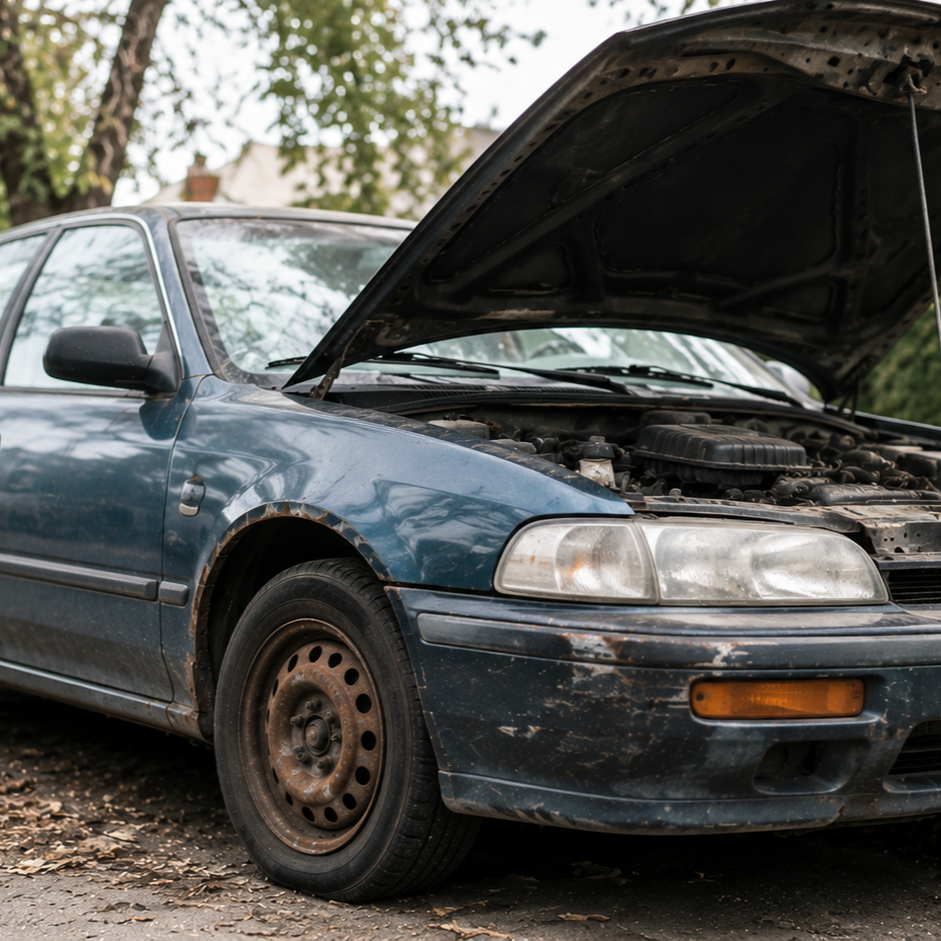
The tow truck drops the crumpled car in your driveway, the insurance check (if there even was one) doesn't cover much, and now you're stuck with a vehicle that won't drive and a spot you'd like back. The good news, most people don't expect: that wreck still has cash value. The harder question is how much — and the honest answer is that it depends on a handful of specific things, not on a single sticker price. Here's what actually moves the number.
The Two Numbers That Set the Floor and the Ceiling
Every wrecked car offers lives between two values, and knowing both keeps you from being talked down.
The floor is scrap value. Even a car good for nothing but crushing is worth its weight in metal, priced on tonnage and the going scrap rate — which is why a heavy truck nets more than a small sedan, and why the same car is worth more in a strong metal market than a weak one. In mid-2026, scrap steel has been trading near record highs at around $400 per ton, and junk cars sold purely for scrap commonly bring $100 to $500, with heavier or larger vehicles reaching $1,000 or more.
The ceiling is salvage value — what the car is worth when its undamaged parts still have buyers. The insurance industry generally pegs salvage at 20 to 40 percent of the car's pre-accident market value. A three-year-old crossover with a smashed front end but a healthy engine, transmission, and clean interior sits near the top of that range. A fifteen-year-old car with a tired engine sits near the bottom, closer to pure scrap. Where your car lands between those two numbers comes down to the details below.
What Actually Drives the Offer
A wrecked car isn't priced like a used car on a lot. It's priced as a collection of parts plus a pile of metal, and a few factors decide how much is worth saving.
| Factor | Why it moves the price |
|---|---|
| Year, make, and model | Common vehicles have parts buyers want; demand sets the value |
| What survived the wreck | An intact engine, transmission, and good panels are worth real money |
| Catalytic converter | Contains precious metals; an intact one can add roughly $50 to $400 |
| Mileage and overall condition | Lower miles mean the surviving parts have more life left |
| Title status | A clean title in hand earns more than a missing or salvage title |
| Scrap metal market | The going steel rate sets the baseline the whole car is measured against |
How the Offer Is Actually Calculated
It helps to see the math buyers use. They start from the car's market value — typically the average of its retail and wholesale figures — and then apply a percentage that reflects how much is recoverable after a wreck. In practice, salvage often lands near a quarter to two-fifths of that market value, which is where the 20-to-40-percent rule comes from. The worse the damage and the lower the parts demand, the closer the offer slides toward the scrap floor.
This is also why real payouts are often higher than the scrap number alone suggests. Wrecked late-model vehicles with good drivetrains regularly clear well over $1,000 — a recent-year sedan or pickup with salvageable parts can land in the $1,500 to $2,400 range — because the buyer is paying for the parts, not the metal. The crushed shell is only the last, smallest piece of the value.
Why Parts Demand Matters More Than Damage
It's easy to assume a more damaged car is worth less across the board, but that's not quite how buyers think. What they're really asking is: how many parts can I pull off this and sell? A car wrecked hard in the front can still have a perfect rear end, a good transmission, intact doors, and a working infotainment system — all of which have buyers looking for exactly those pieces.
This is why a popular, common model often fetches more wrecked than a rare one. Parts demand is a named pricing factor for a reason: pieces for a vehicle that sold by the hundreds of thousands move quickly, while parts for an oddball model sit on a shelf. When you call for an offer, the year, make, model, and what's still good are the first things a serious buyer asks, because that's what they're really buying.
The Catalytic Converter Factor
One part deserves its own mention because it surprises people: the catalytic converter. It contains small amounts of platinum, palladium, and rhodium, and even on an otherwise worthless car, an intact converter carries real value on its own — often somewhere between $50 and a few hundred dollars toward the offer, depending on the vehicle. Converter theft spiked enough a few years ago to make national news, which tells you how much the part is worth, even though reported thefts have fallen sharply more recently.
This cuts two ways for a seller. If your wrecked car still has its converter, that's money on the table and part of why the offer is what it is. If it was already stolen or removed before you sell, expect the offer to come down because the buyer just lost one of the more valuable parts of the vehicle.
Title, Paperwork, and Running Condition
You can usually sell a car that won't start — non-running vehicles are routine for buyers who deal in salvage and scrap, since they're after parts and metal, not a daily driver. What matters more than whether it runs is whether you can prove you own it. A clean title in your name is the smoothest sale and typically the best offer. A salvage title — branded after an insurer totals the car — still sells, just for less, often 20 to 40 percent below a comparable clean-title vehicle, because it can't easily go back on the road.
Have your paperwork ready: the signed title, the keys, and a lien release if the car was ever financed. No title at all is the trickiest case; some buyers can still work with the registration and your ID, depending on the situation, but it narrows your options and tends to lower the offer. If you've lost the title, a replacement can usually be requested rather than writing the car off as unsellable.
The Desert Advantage Most Sellers Don't Know About
Here's where a Phoenix-area car often has a quiet edge. In the northeastern "Salt Belt," road salt and humidity eat the underside of a vehicle, and corroded parts are worth far less because they're seized, pitted, or unsafe to reuse. The dry desert climate barely rusts anything. The surviving parts on a Valley car — suspension components, brake hardware, body panels, frame sections — are frequently in better shape than the same parts off a car from a wetter region, and clean, rust-free parts are worth more to buyers.
The flip side of the climate shows up under the hood and in the cabin. Extreme heat is hard on batteries and cooling systems, and relentless UV fades paint and cracks dashboards, which is part of why so many cars here reach "junk" status in the first place. But for the parts that live underneath, the dry air is a genuine plus that can nudge your offer up.
Getting the Most for Your Wrecked Car
A few simple moves protect your number. Have the title ready, know your year, make, model, and mileage before you call, and be straight about what's damaged and what still works — an accurate description gets you an accurate offer instead of a lowball revised down at pickup. Don't strip the car of valuable parts like the converter before selling unless you already have a buyer for them, since a whole car with everything intact is usually worth more than the leftovers.
Finally, factor in towing. A wrecked car must get to the buyer somehow, and a service that includes free towing and pickup puts more net cash in your pocket than one that quotes a slightly higher number and then deducts a tow fee. Compare the offer after towing, not before. When you're ready, you can usually get a cash offer over the phone from your year, make, model, and a quick description of the damage.
Is a wrecked car that doesn't run still worth anything?
Almost always, yes. Buyers who deal in salvage and scrap are after parts and metal, not a car they can drive, so a non-running vehicle is routine for them. The engine may be dead, and the car may not start, but the transmission, panels, electronics, wheels, and the metal itself all carry value.
How is the value of a wrecked car calculated?
It's figured from two directions: the scrap value of the metal by weight, and the salvage value of the parts that survived. Buyers start with the car's market value, then apply a percentage — often around 20 to 40 percent of the pre-wreck value — based on the year, make, and model, what's still good, the catalytic converter, the title, and the current scrap rate. The worse the damage and the lower the parts demand, the closer it slides to scrap.
Do I need the title to sell a wrecked car?
Having the title makes for the smoothest sale and the best offer. Some buyers can work with just the registration and your ID, depending on the circumstances, but no title narrows your options and usually lowers the price. If you've lost the title, you can typically request a replacement rather than writing the car off as unsellable.
Does a wrecked car's make and model really affect the price?
Significantly. Common, popular vehicles have parts that buyers actively want, so they move fast and hold value; parts for rare models sit unsold. That's why a wrecked everyday sedan or truck often brings more than a rare model with few interested buyers — the demand for its usable parts is simply higher.
Know What Drives the Number
What a wrecked car is worth in cash comes down to a few things working together: how much intact, reusable value is left, the weight and current scrap price of the metal, the demand for its parts, and whether it still has a clear title. A car that won't run still has real worth in its parts and metal, so the smart move is getting it assessed as-is rather than paying to fix what you plan to let go.
Got a wrecked car you want to turn into cash? — Get a fair, no-obligation offer for it as-is, running or not. I Buy Junk Cars serves Phoenix and across the Valley. Call (480) 771-8290.