How Do You Know When Your Car Is Officially Junk?
QUICK ANSWER: A car is "junk" when it no longer makes sense to keep, repair, or sell normally — usually because repair costs exceed its value, it doesn't run or isn't safe to drive, or it's too old, damaged, or worn to be worth fixing. Telltale signs include repairs costing more than the car is worth, a non-running or undrivable car, major mechanical failures like a bad engine or transmission, extensive body damage or rust, a failed inspection that's not worth fixing, or a salvage title. There's no single official line, but when keeping the car costs more than it returns and it's near the end of its usable life, it's effectively junk — and at that point, selling it for cash to a junk car buyer is often the smartest move.
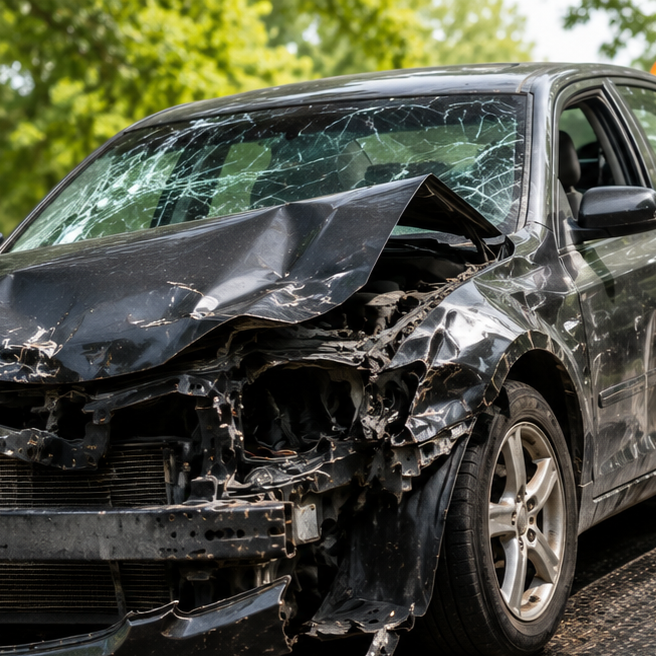
People often ask when a car "officially" becomes junk, as if there's a precise line it crosses. In reality, a car is junk when keeping it no longer makes practical or financial sense — when the cost and hassle of holding onto it outweigh what it's worth or what it does for you. While there's no single official definition, several clear signs tell you a car has reached that point. Here's how to know.
There Is No Single "Official" Line — But There Is a Tipping Point
It's worth setting the expectation that "junk" isn't a formal status with one definition. A car becomes junk when it's no longer worth keeping, repairing, or selling through normal channels — a practical judgment, not an official designation. Even so, there's a recognizable tipping point: when the math and the condition both say the car has reached the end of its useful life for you. The signs below are how that tipping point shows up. When several apply, the car is effectively junk, even if no one has stamped it as such.
The Biggest Sign: Repairs Cost More Than the Car Is Worth
The clearest signal is financial. When the cost to repair the car exceeds what the car is actually worth, it no longer makes sense to keep fixing it — you'd be spending more than the car's value to keep it running. This is the central test many people use: if a needed repair costs as much as or more than the car would sell for, the car has effectively become junk. An older car with low value and a big repair bill — a failed transmission, a blown engine, major systems needing work — quickly crosses this line. At that point, pouring money into repairs is throwing good money after bad, and the car is worth more sold for cash than kept.
The Car Doesn't Run or Isn't Safe to Drive
A car that doesn't run, or isn't safe to drive, is a strong candidate for junk — especially if fixing it isn't worth the cost. A non-running car that would cost more to repair than it's worth has little practical value as a vehicle. Similarly, a car with safety problems that aren't worth repairing isn't something you can or should keep driving. When a car can't reliably or safely do its basic job of getting you around, and repairing it doesn't pencil out, it's reached junk territory.
| Sign | What it indicates |
|---|---|
| Repairs cost more than the car's value | Not worth fixing; effectively junk |
| Doesn't run or isn't safe to drive | Little practical value if not worth repairing |
| Major engine or transmission failure | Expensive repair often exceeding value |
| Extensive body damage or rust | Costly to fix relative to worth |
| Failed inspection, not worth fixing | Can't be legally/safely driven |
| Salvage title | Already deemed a total loss |
Major Failures, Damage, or a Salvage Title
A few specific conditions commonly push a car into junk status. Major mechanical failures — a bad engine or transmission, especially in an older, lower-value car — often cost more to fix than the car is worth. Extensive body damage or heavy rust can be costly to repair relative to the car's value and may compromise its safety and structural integrity. A failed inspection that isn't worth fixing means the car can't be legally or safely driven without spending more than it's worth. And a salvage title — meaning an insurer already declared the car a total loss — is a strong indicator the car is at or near junk status. Any of these, particularly combined with low value, signals a car that's reached the end of the road.
Why It's Worth Recognizing
Recognizing when your car is junk matters because holding on to a junk car costs you in ongoing repairs, in the space it takes up, and in the value it loses sitting unused. Once a car has crossed the tipping point, the smart move is usually to sell it rather than keep sinking money into it. A junk or non-running car still has value — for its parts, metal, and salvage — and junk car buyers purchase cars in this condition for cash, including ones that don't run, have major damage, or aren't worth repairing. So knowing your car is junk isn't bad news; it's the cue to turn a car that's costing you into cash. Recognizing the signs lets you make that move at the right time instead of continuing to spend on a car past saving.
TIP: Do the simple math: get an estimate for the repair the car needs, and compare it to what the car is actually worth. If the repair costs as much as or more than the car's value, that's your answer — the car is effectively junk, and selling it for cash beats paying to fix it.
How do I know if my car is junk?
There is no single official line, but a car is junk when keeping it no longer makes sense — usually when repairs cost more than the car is worth, it doesn't run or isn't safe to drive, or it has major failures, extensive damage, rust, a failed inspection not worth fixing, or a salvage title. When several of these apply, especially with low value, the car is effectively junk.
What's the main sign a car isn't worth keeping?
The clearest sign is financial: when the cost to repair the car exceeds what the car is worth, it no longer makes sense to keep fixing it. If a needed repair costs as much as or more than the car would sell for, you'd be spending more than the car's value to keep it running. That's the central test that a car has effectively become junk.
Can I sell a car that doesn't run?
Yes. A non-running car still has value for its parts, metal, and salvage, and junk car buyers purchase cars that don't run, have major damage, or aren't worth repairing, paying cash for them. So a car that doesn't run isn't worthless — it's a candidate to sell as junk rather than keep or try to repair, especially if fixing it would cost more than it's worth.
Does a salvage title mean my car is junk?
A salvage title means an insurer has already declared the car a total loss, which is a strong indicator that the car is at or near junk status. While salvage-titled cars can sometimes be rebuilt, the designation reflects significant damage relative to value. Combined with other signs like high repair costs or not running, a salvage title points toward the car being effectively junk and a candidate to sell for cash.
Is it worth repairing an old car with a big repair bill?
Usually not, if the repair costs as much as or more than the car is worth. An older, lower-value car with a major repair — like a failed engine or transmission — often isn't worth fixing, because you'd spend more than the car's value to keep it running. In that case, selling it for cash typically makes more sense than pouring money into repairs.
What should I do once my car is junk?
Sell it rather than keep sinking money into it or letting it sit and lose value. A junk or non-running car still has value for parts, metal, and salvage, and junk car buyers purchase cars in this condition for cash. Recognizing your car is junk is the cue to turn a car that's costing you money into cash, at the right time, instead of continuing to spend on it.
Junk Is When Keeping It Costs More Than It's Worth
A car is "officially" junk not by any formal definition but when keeping it no longer makes sense — when repairs exceed its value, it won't run or isn't safe, or major damage and age have caught up with it. When those signs line up, the smart move is to stop spending and sell the car for cash, since even a junk car has value for parts and salvage. Recognizing the tipping point lets you turn a money-losing car into cash.
Think your car has reached junk status? — Get a cash offer for it, running or not, and stop spending on a car past saving. I Buy Junk Cars serves Phoenix and across the Valley. Call (480) 771-8290.