How Is a Junk Car's Value Determined? 7 Real Drivers
You have a car sitting in the driveway that will not start, or one that runs but is not worth fixing. You call around for offers and get numbers that do not match. One buyer quotes a higher price than the next for what looks like the same tired sedan. That gap is not random, nor is it a negotiating trick. It comes from a short list of real factors that every serious junk car buyer runs through before naming a figure.
Understanding those factors puts you on even footing. You will know why your car is worth what it is worth, which pieces to leave alone, and what to have ready when the buyer calls. Below is how the number actually gets built, from the metal on up.
Scrap Metal Weight Sets the Floor
Every junk car has a baseline worth, even if nothing on it can be reused. That baseline is the recyclable metal in the body, frame, and components. When a car reaches the end of its road, it can be crushed, shredded, and melted back into raw steel and other metals that mills buy by the ton.
Because that floor is measured by weight, size matters. A full-size truck or an older sedan with a lot of heavy steel carries more recyclable mass than a small, lightweight compact built with more plastic and aluminum. The heavier the car, the higher its scrap baseline tends to sit.
The other half of the scrap equation is the market. Scrap metal trades like any commodity, and the going rate moves week to week based on demand from mills and recyclers. When rates are up, the metal floor under your car rises with them. When rates soften, that floor eases back. This is why a quote you got months ago may not hold today, and why two honest buyers can differ simply because they are pricing off slightly different market moments or different downstream buyers.
Reusable Parts Push Value Above Scrap
Scrap is the floor, not the ceiling. Most cars are worth more disassembled for usable parts than melted for metal, and that parts value is where offers really separate.
A junk car buyer looks at your vehicle and asks a practical question: who needs what is on this car? If your make and model is common on the road, there are drivers and repair shops nationwide hunting for the exact engine, transmission, doors, mirrors, seats, wheels, alternator, starter, and electronics your car still carries. Every one of those pieces that can be pulled, tested, and resold as a working component adds to the total. A common, popular model with a busy parts market almost always beats a rare or orphaned one that nobody is shopping for.
That is the core of it. The buyer weighs scrap value against parts value and works off whichever is higher. A stripped or unpopular car may live near its scrap floor. A complete, in-demand model can be worth considerably more because its parts have somewhere to go.
The Catalytic Converter Is a Standout Part
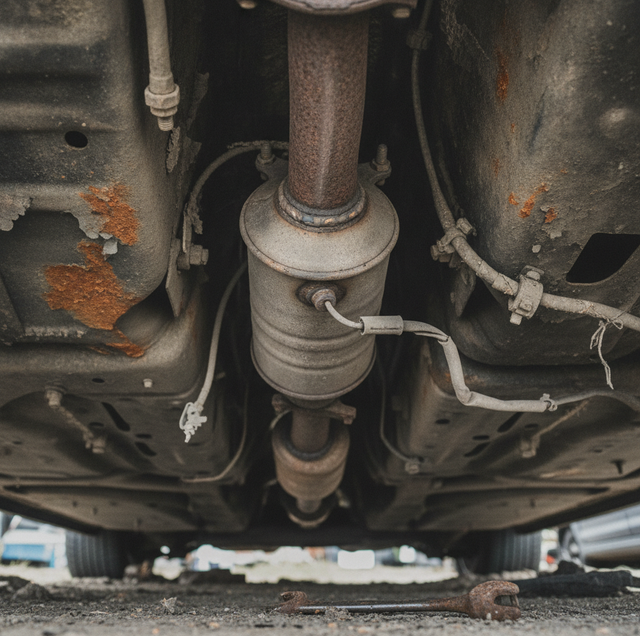
One component deserves its own mention: the catalytic converter, the canister in your exhaust that scrubs emissions. Inside it are small quantities of precious metals that recyclers recover and refine. That recoverable material makes an intact converter one of the single most valuable pieces on a typical junk car.
It also makes converters a well-known theft target, which is worth keeping in mind. If your car still has its converter attached, leave it there. Removing it yourself strips out one of the most valuable items the buyer is counting on, and it can turn a fair offer into a thin one. A car that arrives whole, converter included, is simply worth more.
Condition: Running, Complete, and Undamaged
Two cars of the same year and model can land in very different places depending on condition, and buyers read condition along a few clear lines.
Running versus non-running is the big one. A car that starts, drives, and holds together lets the buyer resell major assemblies like the engine and transmission as tested, working units, rather than gambling on them or scrapping them. Complete versus stripped matters too: a car with all its panels, glass, wheels, and interior offers more sellable parts than one already picked over. And damage counts against value in proportion to how much it destroys. Heavy rust eats into the recyclable metal and can ruin reusable panels. Flood damage corrodes wiring and electronics that would otherwise sell. Fire damage can compromise nearly everything at once.
None of this means a rough car is worthless. A non-running, dented, rusty vehicle still has its metal floor and often plenty of salvageable parts. Condition simply moves the number up or down from that baseline.
Title Status Shapes What a Buyer Can Do
The paperwork on your car is part of its value because it defines what the buyer is legally able to do with it. A clean title says the vehicle can be resold or transferred with the widest set of options. A salvage or rebuilt title signals prior major damage and narrows those options, which can pull the offer down. Having no title at all is the tightest case, since it limits how the buyer can process the vehicle afterward.
Some buyers can still work with a car without a title by using alternative paperwork where the rules allow it, so a missing title does not automatically make a car unsellable. But clean documentation gives the buyer more room to maneuver, and more room generally supports a stronger number. Having your title or knowing exactly what paperwork you hold before you ask for an offer makes the whole exchange smoother.
Year, Make, Model, and Parts Demand
Age and identity feed directly into that part's question from earlier. A newer vehicle often has parts still in active demand and components that command more as working units. An older one may be worth more for its raw metal than for pieces almost nobody is searching for anymore.
But newer is not a strict rule, because demand does not track age alone. A decades-old model that stayed popular can keep a lively parts market long after production ended, while a newer but uncommon model may have few takers for its specific components. What the buyer is really gauging is whether parts for your particular year, make, and model are still in demand. That demand, more than the calendar, decides how far above scrap the offer can climb.
Location and Tow Distance
The last factor is purely logistical: where the car sits. A junk vehicle usually cannot drive itself to the buyer, so it has to be towed, which takes time and costs money. A car parked close to the buyer's yard is cheaper to collect than one far out or in an awkward-to-reach spot.
That cost does not change what your car is made of, but it is part of the math behind the final figure, since the buyer accounts for the effort of getting the vehicle in. It is also why a local buyer who tows in your area can often work with you more easily than one operating from a distance.
How the Number Comes Together
Put the pieces side by side, and the logic is consistent. The buyer establishes the scrap floor from your car's weight and the current metal market. Then they estimate parts value based on how common and in-demand your make and model is, how complete and drivable the car is, and whether the high-value items like the catalytic converter are still attached. Whichever of those two totals, scrap or parts, comes out higher is what drives the offer. Title status and tow distance, then adjust the figure at the edges.
Picture a used bookstore weighing a box you bring in. A few titles are collectible and priced individually for the right buyer; the rest are valued as bulk paper by the pound. Your box is worth whichever count is higher, the sum of the good titles or the bulk weight, and pulling out the collectible ones before you hand it over only shrinks the total. A junk car works the same way, with sought-after parts standing in for collectible titles and scrap metal for the bulk.
That comparison points to the single most useful thing you can do: keep the car complete. A vehicle that still has its catalytic converter, battery, wheels, drivetrain, and electronics gives the buyer the full menu of value to work from. Once you start pulling pieces to sell separately, you often remove the very items that carried the worth, and what is left drifts back toward the bare scrap floor. In most cases, a whole car nets more than the sum of a few sold parts plus the scrapped remainder.
What sets the floor price of any junk car?
Scrap is priced per ton of shredded steel, and a typical passenger car weighs on the order of a ton and a half, so body type and curb weight directly affect the base price. A full-size truck built with heavy steel outweighs a plastic-and-aluminum compact and clears a higher scrap floor. The going rate that particular week then nudges that figure up or down, which is part of why quotes have a shelf life.
Why is the catalytic converter such a big deal?
It contains small amounts of precious metals, chiefly platinum, palladium, and rhodium, that recyclers extract and refine. Those metals are what make an intact converter one of the most valuable single parts on a junk car, and their value is exactly why converters are such frequent targets of theft. A converter still bolted in place is money left on the car.
Does it matter if the car runs or not?
Yes, and it usually shows up in the offer, though a non-runner is far from worthless. Even a car with a seized engine still carries a resellable transmission, axles, and body panels that a buyer can move. Buyers verify "runs" by a simple test: whether the car can drive onto the truck under its own power, or has to be dragged up with a winch. One that starts and drives beats an identical non-runner because more of its assemblies go back into service rather than into the crusher.
Why do two identical-looking junk cars get different offers?
Parts demand is usually the reason. A common model whose doors, engine, and electronics are still needed by other owners has a live parts market that pulls up its value, while a rare or orphaned model with no buyers for its specific components falls back toward mostly scrap value. Two cars can look the same in the driveway and sit in completely different demand pools.
Does a missing title lower what I can get?
Often, yes, but it is not always a dead end. Some buyers accept a bill of sale plus your current registration, or can guide you toward a bonded title where local rules allow, so the car still moves. A clean title simply hands the buyer the most options for what to do with it afterward, and more options support a stronger offer, so tracking down your paperwork before you sell tends to pay off.
Should I strip parts off before selling it?
Usually not, and the catalytic converter is the clearest example of why. Pull it, and buyers deduct heavily for a car missing its converter, often more than you would ever recover selling the converter loose. The battery, wheels, and electronics tell the same story: a complete car generally nets more than selling a handful of parts yourself and scrapping the rest, and it saves you the labor. Handing over a whole vehicle almost always comes out ahead.
Get a straight answer on what your vehicle is worth — no repairs, no cleanup, no runaround. I Buy Junk Cars serves Phoenix and across the Valley. Call (480) 771-8290.